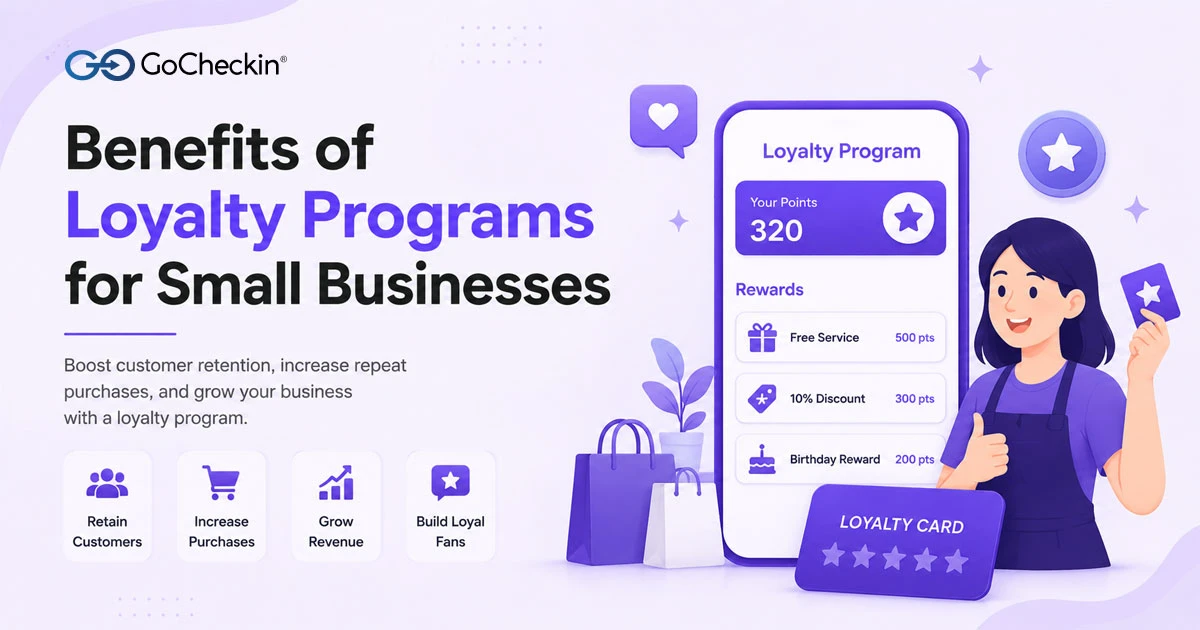
Discover the benefits of loyalty programs for small businesses, including higher customer retention, repeat purchases, customer lifetime value, and revenue.
Benefits of Loyalty Programs for Small Businesses
For small businesses, attracting a new customer is only the first step. The real challenge is getting that customer to come back, spend more, and eventually become a loyal customer. This is where a customer loyalty program can make a significant difference.
A well-designed loyalty program gives customers a reason to return while helping small businesses increase customer retention, repeat purchases, engagement, and long-term revenue. With solutions such as GoCheckIn, businesses can also simplify the process of managing customer information, rewards, and engagement.
In this article, we explore the key benefits of loyalty programs for small businesses and how they can support sustainable business growth.
What Is a Customer Loyalty Program?
A customer loyalty program is a marketing strategy that rewards customers for continuing to do business with a company. Customers may earn points, discounts, exclusive offers, free services, or other rewards based on their purchases or visits.
For example, a small salon could offer:
- 1 point for every dollar spent
- A free service after reaching a certain number of points
- A discount on the customer's next visit
- Birthday rewards
- Special offers for returning customers
- Referral rewards for bringing in new customers
The goal is simple: give customers a reason to choose your business again instead of going to a competitor.
1. Increase Customer Retention
One of the biggest benefits of loyalty programs is improved customer retention.
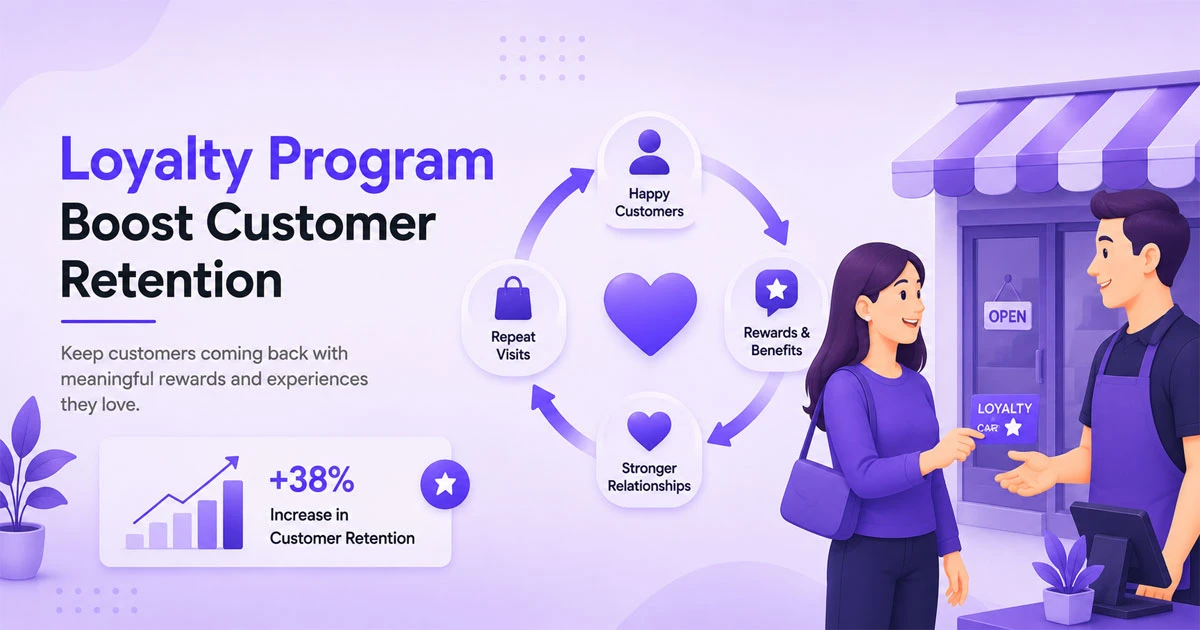
A customer loyalty program gives customers more reasons to return and continue using a business.
When customers know they can receive rewards by continuing to purchase from your business, they have an additional reason to return. Instead of making a one-time purchase, they are encouraged to build a relationship with your brand.
For small businesses, customer retention can be particularly valuable because repeat customers often require less marketing effort than constantly acquiring new customers.
A loyalty program can turn:
First-time customer → Returning customer → Loyal customer → Brand advocate
This creates a stronger customer base and reduces dependence on continuously finding new customers.
2. Encourage Repeat Purchases
Loyalty programs are designed to encourage customers to come back.
For example, a nail salon might offer a reward after five visits. A customer who is already planning to return may be more motivated to schedule their next appointment sooner because they are getting closer to the reward.
This can increase the frequency of customer visits and create more predictable revenue.
For service-based businesses, encouraging customers to book their next appointment before leaving can make a loyalty program even more effective.
3. Increase Customer Lifetime Value
Customer Lifetime Value (CLV) represents the total value a customer can generate throughout their relationship with a business.
A customer who visits once may generate $50 in revenue. A loyal customer who visits every month for several years can generate thousands of dollars.
Loyalty programs can help increase CLV by encouraging customers to:
- Visit more frequently
- Purchase additional services
- Spend more per transaction
- Stay with the business longer
- Try new products or services
Instead of focusing only on acquiring more customers, small businesses can use loyalty programs to get more value from the customers they already have.
4. Increase Customer Spending
A loyalty program doesn't only encourage customers to return. It can also encourage them to spend more.
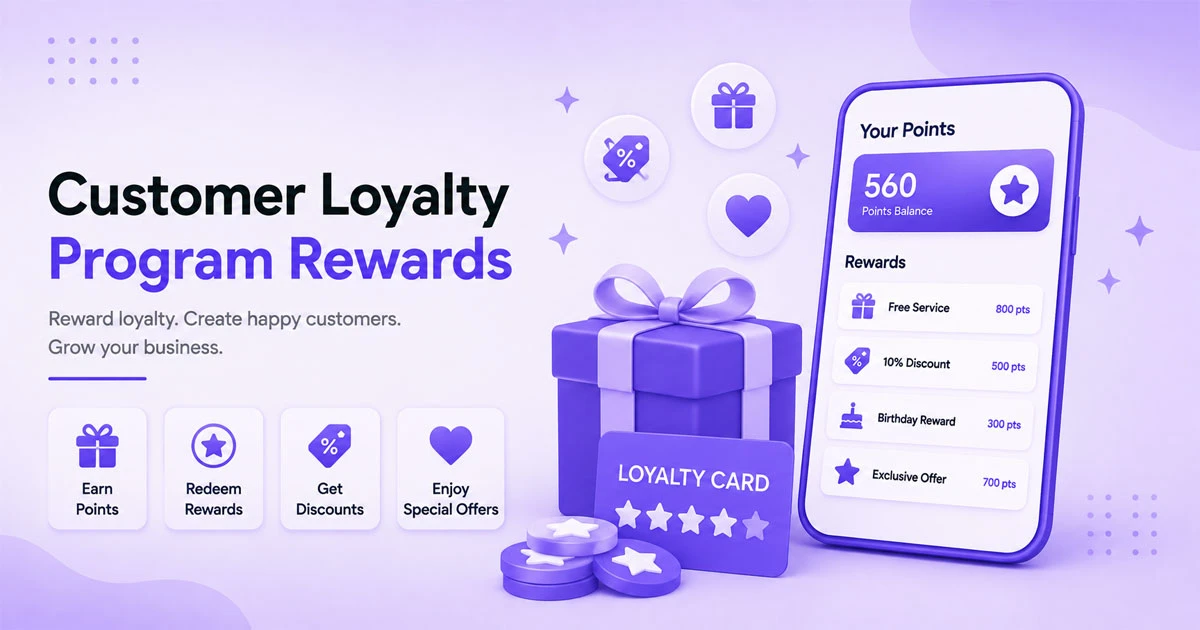
Rewards and loyalty points can encourage customers to return more often and spend more.
For example, a business could offer:
Spend $100 → Earn 100 points
Or:
Spend $150 → Receive a $15 reward
Customers may be more willing to add another service or product to their purchase when they know they are getting closer to a reward.
This makes loyalty programs a useful strategy for increasing average customer spend.
5. Build Stronger Customer Relationships
Loyalty isn't only about discounts.
A good loyalty program allows businesses to better understand their customers. By tracking customer visits, purchases, preferences, and engagement, businesses can create more personalized experiences.
For example, a salon could send a customer a birthday offer or remind them when it may be time to schedule their next appointment.
Personalized communication makes customers feel recognized rather than treated like another transaction.
6. Generate Valuable Customer Data
Customer data is another important benefit of loyalty programs.
Depending on the system used, businesses can collect useful information such as:
- Customer names
- Contact information
- Visit history
- Purchase history
- Reward activity
- Service preferences
- Customer engagement
This information can help small businesses make better marketing decisions.
Instead of sending the same promotion to everyone, businesses can create more relevant campaigns based on customer behavior.
7. Create More Effective Marketing Campaigns
A loyalty program can become an important part of a small business's marketing strategy.
For example, businesses can create campaigns for:
- Customers who haven't visited recently
- High-value customers
- Frequent customers
- Customers close to earning a reward
- Birthday customers
- Customers who purchased a specific service
This type of targeted marketing can be more relevant than broad promotions because it is based on actual customer behavior.
8. Turn Customers Into Brand Advocates
Loyal customers can become some of a small business's best marketers.
A customer who consistently has a positive experience may recommend the business to friends, family, and coworkers.
Businesses can strengthen this effect by adding referral rewards to their loyalty program.
For example:
Refer a friend → Your friend gets $10 off → You receive 100 loyalty points
This creates a win-win situation while helping the business generate new customers through existing customers.
9. Compete With Larger Businesses
Small businesses often compete with companies that have larger advertising budgets, more locations, and greater brand awareness.
A loyalty program provides a way to compete through customer relationships rather than price alone.
When customers feel recognized, rewarded, and appreciated, they may be less likely to switch to another business simply because a competitor offers a slightly lower price.
For local businesses such as nail salons, spas, barbershops, restaurants, and beauty businesses, this relationship can become a major competitive advantage.
10. Make Loyalty Easier With Digital Tools
Managing a loyalty program manually with paper cards or spreadsheets can become difficult as the customer base grows.
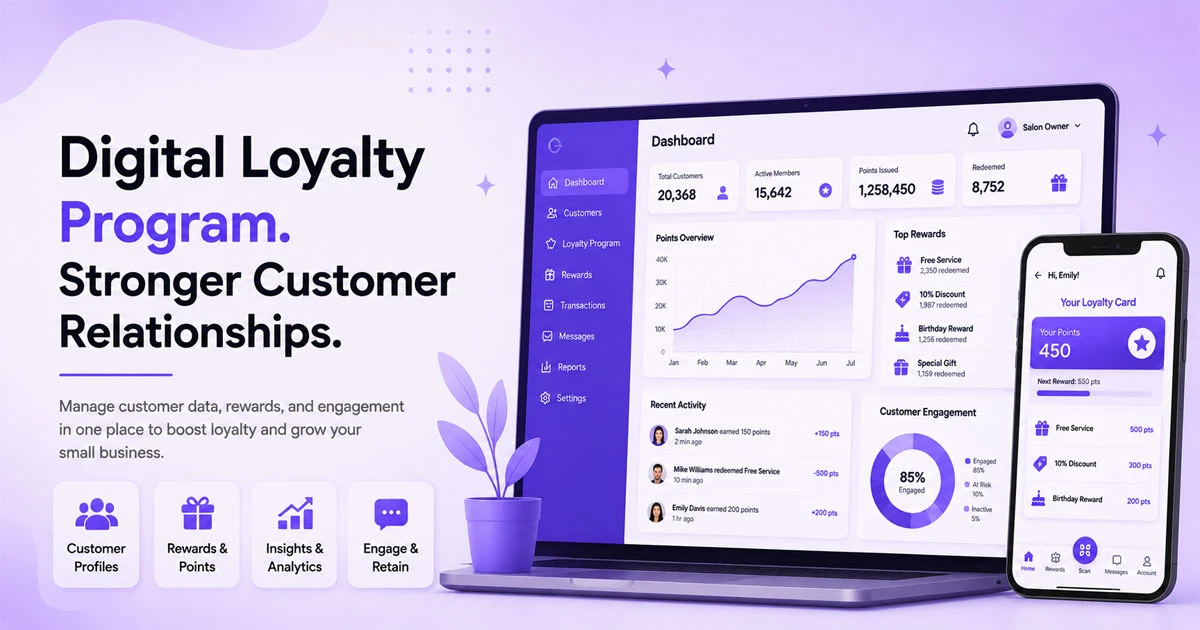
Digital loyalty tools help small businesses manage customer data, rewards, and customer engagement more efficiently.
A digital customer engagement platform can simplify the process by helping businesses organize customer information, track interactions, and create more consistent customer experiences.
GoCheckIn is designed to help businesses improve customer engagement and build stronger relationships with their customers through digital customer management and check-in solutions.
By connecting customer data and engagement activities in one system, small businesses can spend less time managing customer information manually and more time focusing on customer service.
How to Build an Effective Loyalty Program
A successful loyalty program doesn't need to be complicated.
Start with a simple structure:
1. Define the goal
Decide whether you want to increase repeat visits, average spending, referrals, or customer retention.
2. Choose a valuable reward
Give customers a reward they actually want. The reward doesn't always have to be a large discount.
3. Make the rules simple
Customers should immediately understand how they earn and redeem rewards.
4. Promote the program
Mention the loyalty program during checkout, appointments, email campaigns, social media, and other customer touchpoints.
5. Track performance
Monitor metrics such as repeat visit rate, redemption rate, average spending, and customer retention.
Final Thoughts
The biggest benefits of loyalty programs for small businesses go beyond giving customers discounts. A well-designed program can increase customer retention, encourage repeat purchases, improve customer lifetime value, increase spending, generate valuable customer data, and strengthen long-term customer relationships.
For small businesses competing in crowded local markets, building loyalty can be more sustainable than constantly relying on new customer acquisition.
With the right digital tools and a simple reward strategy, businesses can turn occasional customers into repeat customers and long-term brand advocates.
If your goal is to build stronger customer relationships and create a more effective customer retention strategy, a digital solution such as GoCheckIn can help streamline the customer engagement process and give your business a stronger foundation for long-term growth.