Avoid common reputation management mistakes. Learn how to respond to negative reviews, monitor customer feedback, protect your online reputation, and build customer trust.
Reputation Management Mistakes: 10 Common Errors Businesses Should Avoid
Online reputation plays a critical role in how customers discover, evaluate, and choose a business. Whether you operate a nail salon, spa, restaurant, or local service company, customer reviews and online feedback can influence purchasing decisions, customer trust, and long-term growth.
However, many businesses make reputation management mistakes that damage customer relationships and reduce their ability to attract new customers. Ignoring negative reviews, responding defensively, and failing to monitor customer feedback can turn small problems into serious reputational challenges.
In this guide, we explore 10 common reputation management mistakes and explain how businesses can avoid them to build trust, improve customer satisfaction, and strengthen their online presence.
What Is Reputation Management?
Reputation management is the process of monitoring, influencing, and improving how customers perceive a business online and offline. It includes managing online reviews, responding to customer feedback, monitoring brand mentions, and addressing service issues before they escalate.
For local businesses, reputation management often focuses on platforms such as Google Business Profile, Yelp, Facebook, and industry-specific review websites.
Effective reputation management helps businesses identify customer concerns, demonstrate accountability, and maintain a consistent customer experience across different channels.
10 Common Reputation Management Mistakes
1. Ignoring Negative Customer Reviews
One of the most damaging reputation management mistakes is ignoring negative reviews. When customers share complaints about long wait times, poor service, or billing issues, they expect the business to acknowledge their concerns.
Leaving negative reviews unanswered can make potential customers question whether the business values customer satisfaction.
How to avoid this mistake:
- Monitor review platforms regularly.
- Acknowledge the customer's experience.
- Offer a sincere apology when appropriate.
- Explain how the issue will be addressed.
- Invite the customer to continue the conversation privately when necessary.
For example, a nail salon receiving a complaint about an appointment delay should acknowledge the inconvenience and explain how it plans to improve scheduling.
A timely, professional response demonstrates accountability to both the reviewer and future customers.
2. Responding Emotionally to Negative Feedback
Receiving criticism can be frustrating, especially when a business believes a review is unfair. However, arguing with customers publicly can make the situation worse.
Defensive responses, sarcastic comments, and personal attacks can damage brand credibility and discourage potential customers from visiting.
Instead, remain calm, acknowledge the concern, and focus on resolving the underlying problem.
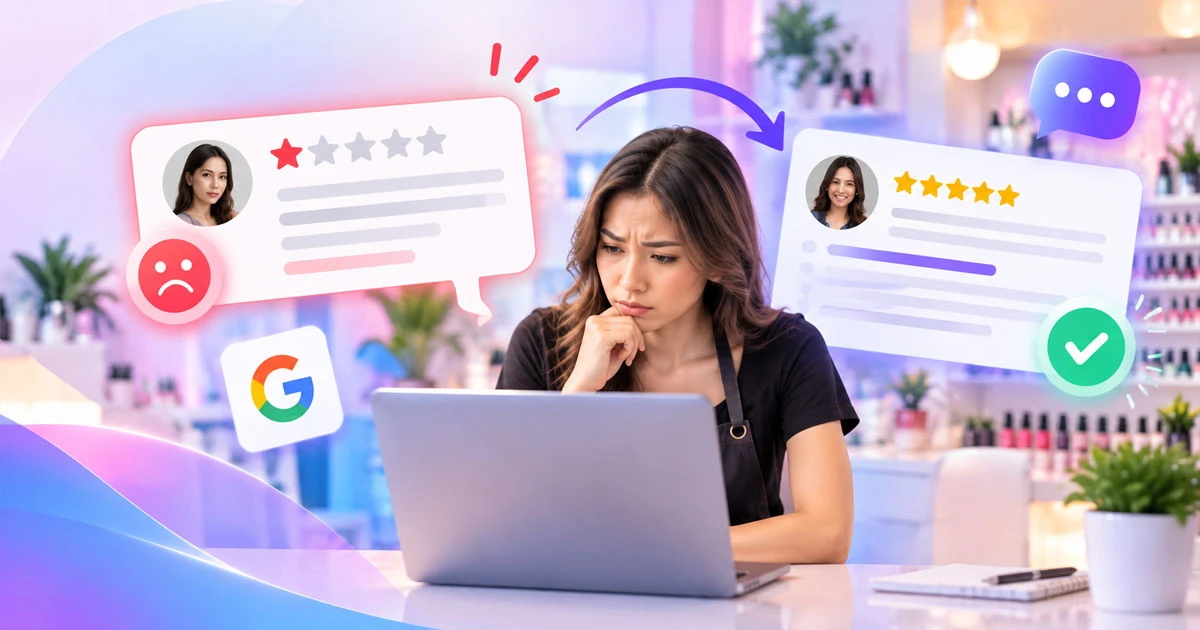
Responding professionally to negative reviews helps businesses address customer concerns and maintain trust.
Best practice: Write responses that are professional, respectful, and solution-oriented. If a review contains inaccurate claims, correct the facts politely without disclosing private customer information.
3. Using Generic Responses for Every Review
Copying the same response for every customer review can make interactions feel impersonal. Customers want to know that a business has actually read and understood their feedback.
For example, replying “Thank you for your feedback” to a detailed complaint does little to address the customer's concerns.
To improve review responses, personalize each message by referencing the customer's specific experience, thanking them for relevant feedback, and explaining any appropriate next steps.
Personalized responses help businesses demonstrate genuine customer care and create more meaningful interactions.
4. Ignoring Positive Reviews
Reputation management is not only about handling complaints. Positive reviews also provide opportunities to strengthen customer relationships.
When businesses consistently ignore positive feedback, they miss a simple way to encourage repeat visits and show appreciation.
Thank customers for their support, mention specific details from their reviews, and invite them to return.
For example, a spa could thank a customer for mentioning a relaxing treatment or a friendly staff member.
Responding to positive reviews helps reinforce the behaviors and service qualities that customers appreciate.
5. Buying Fake Reviews or Manipulating Ratings
Purchasing fake reviews, incentivizing customers in exchange for positive ratings, or posting fabricated testimonials can undermine trust and violate review platform policies.
Although these tactics may appear to improve ratings temporarily, they can expose a business to review removal, platform penalties, and reputational damage.
A better approach is to earn authentic reviews.
Ask customers to share honest feedback after completing a service. Make the process convenient by providing a Google review link or QR code, and avoid pressuring customers to leave positive ratings.
Authentic reviews provide more credible insights into customer experiences and support sustainable reputation growth.
6. Failing to Monitor Online Mentions
Customer conversations can happen across multiple platforms, including Google, Yelp, Facebook, social media, and local community groups.
Businesses that monitor only one platform may miss important complaints, recurring service problems, or opportunities to engage with customers.
Establish a consistent monitoring process and assign responsibility for reviewing feedback across relevant channels.
For businesses with multiple locations, centralized reputation monitoring can help managers identify patterns and maintain consistent service standards.
7. Taking Too Long to Respond
Delayed responses can leave customers feeling ignored and allow dissatisfaction to grow.
For example, a customer who reports a booking problem may become more frustrated if the business takes several days to acknowledge the issue.
Set internal response-time targets, prioritize urgent complaints, and use notifications to identify new reviews quickly.
Automation tools can help notify staff when new feedback arrives, while employees can focus on writing thoughtful responses and resolving complex issues.
The goal is not simply to respond quickly but to provide a useful, appropriate response within a reasonable timeframe.
8. Failing to Address the Root Cause of Complaints
Responding to a negative review is only the first step. If the same complaints continue to appear, the business may have an underlying operational problem.
Repeated feedback about appointment delays, inconsistent service quality, or confusing pricing can reveal weaknesses in internal processes.
Businesses should categorize customer feedback, identify recurring issues, and share insights with the relevant teams.
For example, if multiple nail salon customers complain about long waiting times, management may need to improve appointment scheduling, staff allocation, or customer check-in procedures.
Solving the root cause reduces recurring complaints and improves the overall customer experience.
9. Neglecting Customer Feedback and Satisfaction Data
Customer reviews contain valuable information about what customers like, dislike, and expect from a business.
However, some businesses collect feedback without analyzing it or using it to improve their services.

Monitoring customer reviews and recurring complaints helps businesses identify service issues and improve customer satisfaction.
Track key indicators such as average review rating, review response rate, recurring complaint categories, customer satisfaction, and resolution time.
Combine review insights with customer surveys and direct feedback to understand the complete customer experience.
Regular analysis helps businesses identify improvement opportunities and make better operational decisions.
10. Treating Reputation Management as a One-Time Task
Online reputation management is an ongoing process, not a one-time campaign.
A business may receive excellent reviews today but experience declining customer satisfaction later because of staffing changes, inconsistent service, or operational problems.
Create a repeatable reputation management workflow that includes review monitoring, response management, complaint resolution, feedback analysis, and service improvement.
Review performance regularly and update procedures when customer expectations or business operations change.
Consistency is essential for maintaining customer trust over time.
How Can Businesses Improve Their Reputation Management Strategy?
Businesses can improve reputation management by combining responsive communication, consistent monitoring, and customer experience management.
A practical process includes:
- Monitor: Check Google reviews and other relevant platforms regularly.
- Respond: Acknowledge positive and negative feedback with personalized responses.
- Resolve: Address customer concerns and communicate the next steps clearly.
- Analyze: Identify recurring complaints and customer satisfaction trends.
- Improve: Use customer insights to refine services, staff training, and operational processes.
- Encourage honest feedback: Make it easy for customers to share genuine experiences without pressuring them to leave positive reviews.
Technology can make this process more efficient. Customer management and check-in solutions can help businesses organize customer interactions, collect feedback, and identify service issues more systematically.

A smooth check-in process and consistent customer service help businesses build lasting customer relationships.
For example, GoCheckIn helps businesses improve customer check-in and customer experience management workflows. When integrated into a broader customer service strategy, organized check-in processes can help teams understand customer journeys and reduce avoidable friction.
Technology supports reputation management, but genuine service quality and thoughtful customer communication remain essential.
How Does Reputation Management Affect Local SEO?
Online reputation can influence how potential customers evaluate local businesses and decide which providers to contact.
Reviews, ratings, and business responses can contribute to customer confidence and engagement. Google also considers review-related signals, including review quantity and ratings, among the factors associated with local search ranking.
However, reviews alone do not guarantee higher Google Maps rankings. Local visibility depends on several factors, including relevance, distance, and prominence.
Businesses should therefore combine reputation management with an effective local SEO strategy that includes an accurate Google Business Profile, consistent business information, relevant website content, and reliable customer service.
The objective is to build a trustworthy online presence that helps customers find and confidently choose the business.
Frequently Asked Questions About Reputation Management
What is the biggest reputation management mistake?
Ignoring negative reviews is one of the most common mistakes. Unanswered complaints can leave customers feeling unheard and create doubts among potential buyers. Businesses should acknowledge concerns, respond professionally, and address underlying service problems.
How should a business respond to a negative review?
A business should acknowledge the customer's concern, apologize when appropriate, provide a clear next step, and offer to resolve the issue privately when necessary. Responses should remain respectful and avoid disclosing personal information.
How often should businesses monitor online reviews?
Businesses should monitor reviews regularly, ideally with notifications for new feedback. High-volume businesses and multi-location brands may benefit from daily monitoring and a centralized response process.
Can reputation management improve local SEO?
Effective reputation management can support customer trust and local business visibility. Reviews are one of several local ranking considerations, but strong ratings alone cannot guarantee higher rankings on Google Maps.
What tools help businesses manage their online reputation?
Useful tools include Google Business Profile, review monitoring platforms, customer feedback systems, and customer relationship management software. Businesses should select tools based on their review volume, number of locations, and customer service workflow.
Final Thoughts
Reputation management mistakes can weaken customer trust, reduce repeat business, and make it harder for local businesses to attract new customers. Ignoring reviews, responding emotionally, using fake testimonials, and failing to address recurring complaints are all avoidable problems.
By monitoring customer feedback, responding thoughtfully, and improving service quality, businesses can build a stronger online reputation and create better customer experiences.
For salons, spas, and other service-based businesses, reputation management should be part of a broader customer experience strategy. Solutions such as GoCheckIn can support organized check-in and customer management workflows, helping businesses create smoother interactions and build stronger customer relationships over time.