Customer Lifetime Value Explained: What It Is and Why It Matters for Small Businesses
Customer Lifetime Value (CLV) is one of the most useful metrics for understanding how much revenue a customer can generate throughout their relationship with a business. Instead of looking only at the value of a single purchase, CLV considers the total revenue a business can expect from a customer over time.
For businesses such as nail salons, beauty salons, spas, barbershops, and other appointment-based businesses, understanding CLV can help owners make better decisions about marketing, customer retention, promotions, and customer experience.
What Is Customer Lifetime Value?
Customer Lifetime Value (CLV) is the estimated total revenue a business can generate from a customer during the entire relationship with that customer.
A simple CLV formula is:
CLV = Average Customer Value × Average Purchase Frequency × Average Customer Lifespan
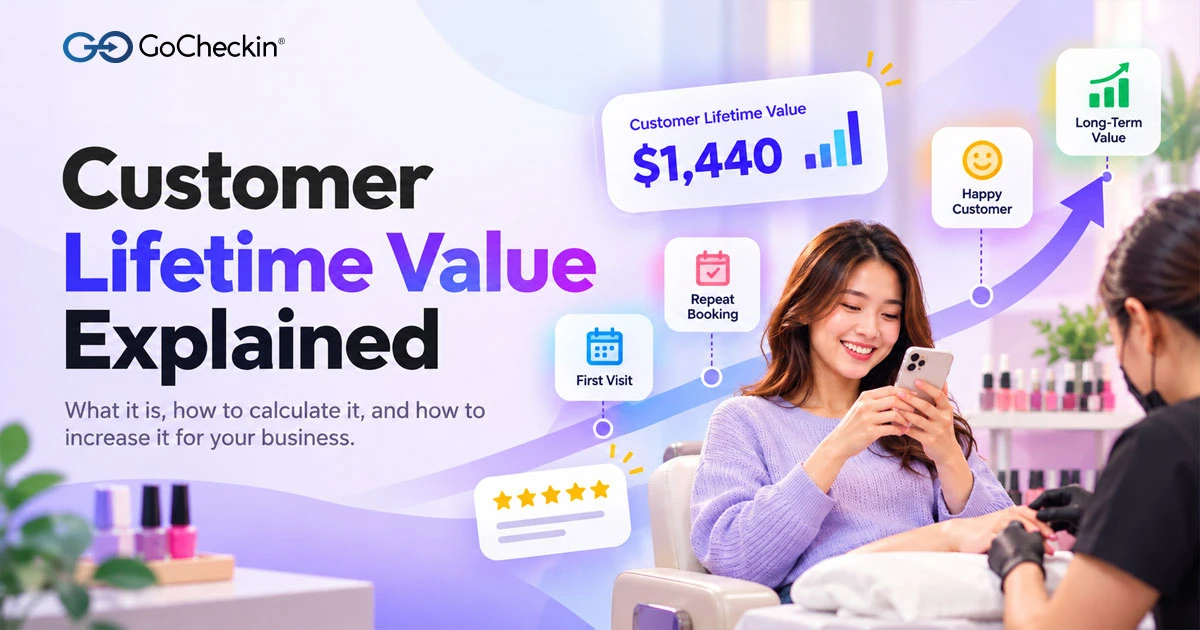
For example, suppose a nail salon customer spends an average of $60 per appointment, visits once per month, and remains an active customer for 24 months.
The estimated customer lifetime value would be:
$60 × 12 visits × 2 years = $1,440
This means that although the customer may spend only $60 during one appointment, their potential long-term value to the business could be $1,440.
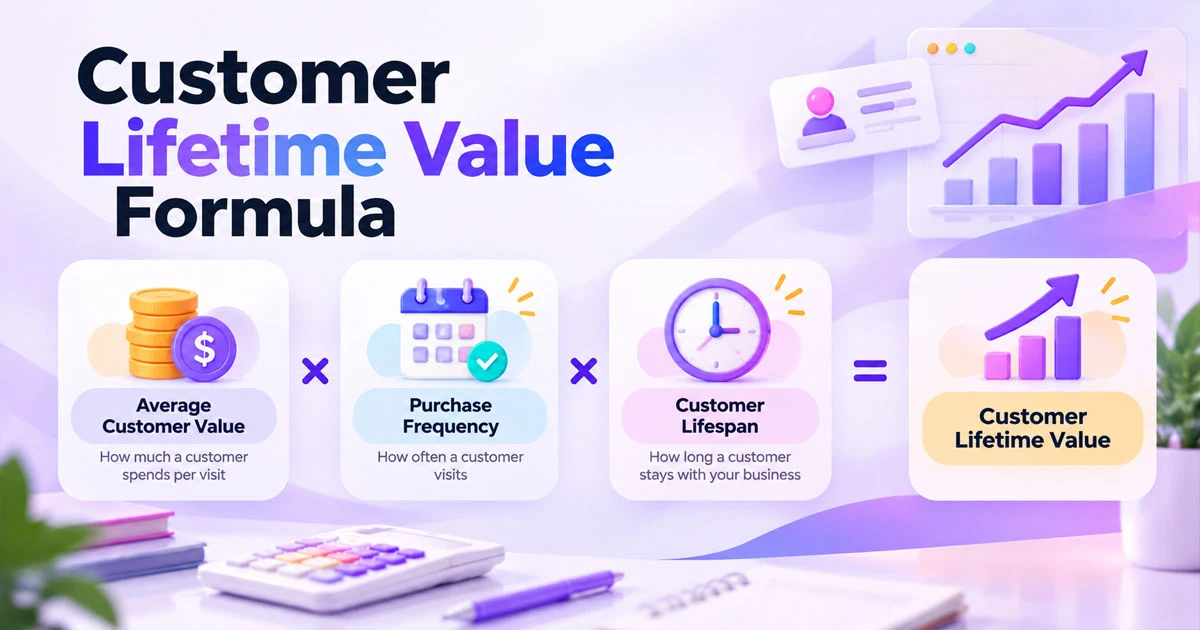
The basic CLV formula combines average customer value, purchase frequency, and customer lifespan.
This is why businesses should not evaluate customers only based on their first purchase.
Why Is Customer Lifetime Value Important?
CLV helps businesses understand the long-term financial value of customer relationships.
A business may spend money on Google Ads, Facebook Ads, TikTok Ads, promotions, or other marketing channels to acquire new customers. However, acquiring a customer is only the beginning.
If a customer visits once and never returns, the business may have limited opportunity to recover its acquisition cost.
On the other hand, a customer who returns regularly can generate revenue for months or even years.
For appointment-based businesses, increasing customer lifetime value often involves:
- Increasing repeat visits
- Improving customer retention
- Encouraging rebooking
- Increasing average order value
- Creating loyalty or membership programs
- Providing a better customer experience
- Reducing missed appointments
- Maintaining consistent communication with customers
CLV vs. Customer Acquisition Cost
Customer Lifetime Value becomes more useful when compared with Customer Acquisition Cost (CAC).
CAC measures how much a business spends to acquire a new customer.
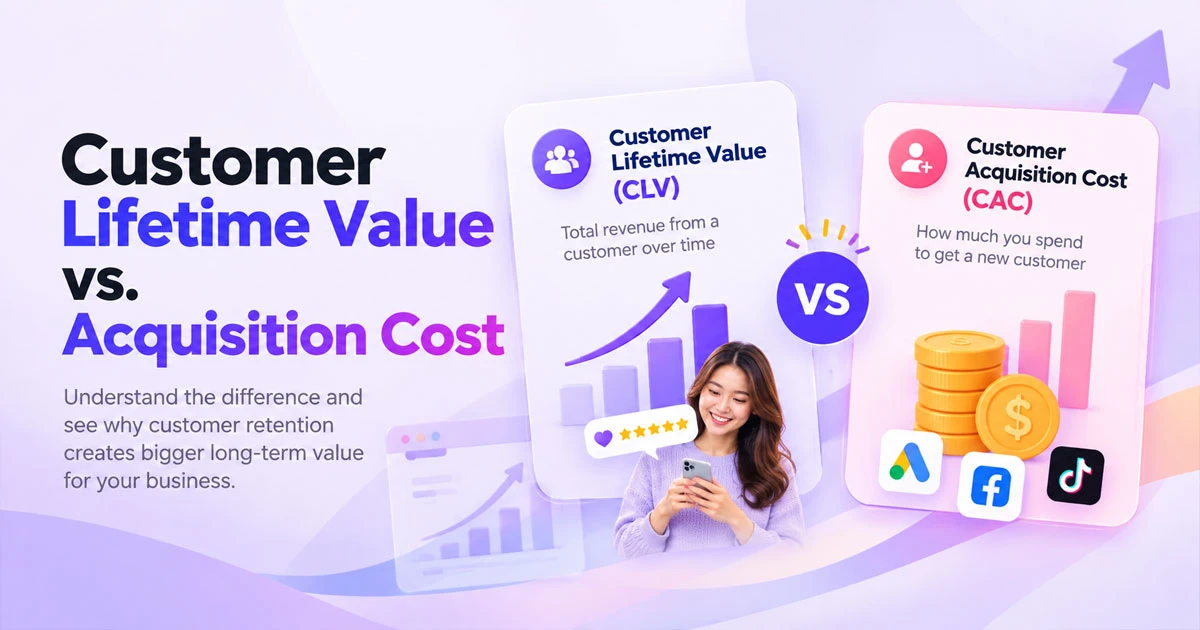
Comparing Customer Lifetime Value with Customer Acquisition Cost helps businesses understand the long-term return of customer relationships.
For example, if a nail salon spends $30 on advertising and promotions to acquire a new customer, its customer acquisition cost is approximately $30.
If that customer only spends $40 once, the business has limited revenue left after acquisition costs.
But if the same customer returns 20 times and spends $60 per visit, the potential revenue is:
$60 × 20 = $1,200
This illustrates why customer retention can have a major impact on the economics of a small business.
Businesses should therefore look beyond the question:
"How many new customers did we get?"
They should also ask:
"How many customers came back, and how much value did they generate over time?"
How to Calculate Customer Lifetime Value
There are several ways to calculate CLV depending on how much customer data a business has.
A simple method is:
CLV = Average Purchase Value × Purchase Frequency × Customer Lifespan
Consider a beauty salon with these numbers:
- Average appointment value: $75
- Average visits per year: 8
- Average customer lifespan: 3 years
The estimated CLV would be:
$75 × 8 × 3 = $1,800
This calculation provides a useful starting point for understanding customer value.
Businesses with more advanced customer data can also calculate CLV using factors such as profit margin, retention rate, discount rates, and customer segments.
Customer Retention Has a Direct Impact on CLV
One of the strongest ways to increase CLV is to improve customer retention.
Retention refers to the ability of a business to keep customers coming back.
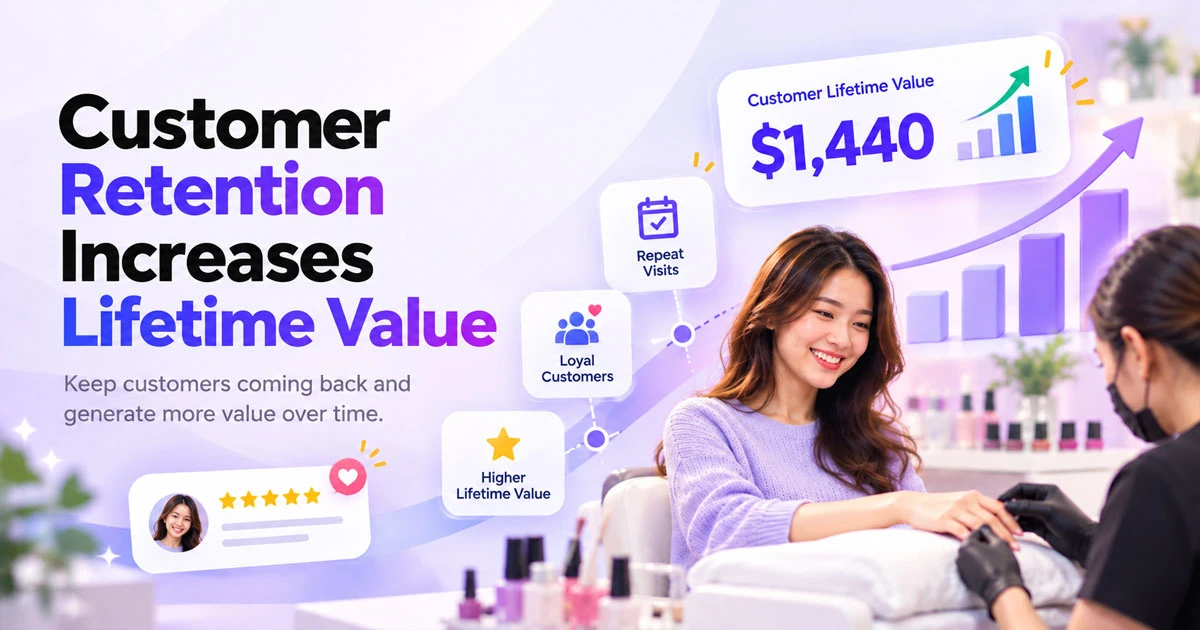
Improving customer retention and repeat visits can increase Customer Lifetime Value over time.
For example, imagine two customers:
Customer A
- Visits once
- Spends $70
- Never returns
Customer B
- Visits every month
- Spends $70 per visit
- Remains a customer for three years
Customer B has a much higher lifetime value even though both customers spent the same amount during their first appointment.
This is especially important for businesses based on recurring appointments, such as nail salons, spas, salons, barbershops, and wellness businesses.
How Check-In and Booking Software Can Support CLV
Customer experience plays an important role in customer retention.
A long waiting time, difficult booking process, missed appointment information, or poor communication can negatively affect the customer experience.
A customer check-in and booking system can help businesses create a more organized customer journey.
With a digital check-in solution such as GoCheckIn, businesses can streamline the process from appointment scheduling to customer arrival.
A smoother customer experience can make it easier for customers to:
- Book appointments
- Check in when they arrive
- Receive service efficiently
- Return for future appointments
- Interact with the business digitally
GoCheckIn can be particularly useful for appointment-based businesses that want to create a more consistent customer experience.
5 Ways to Increase Customer Lifetime Value
1. Make Rebooking Easy
Encourage customers to schedule their next appointment before leaving.
For businesses such as nail salons and beauty salons, regular appointments are an important part of the customer relationship.
A simple and convenient booking process can reduce friction and make repeat visits easier.
2. Improve the Customer Experience
Customer experience is not limited to the quality of the service itself.
It also includes:
- Booking
- Check-in
- Waiting time
- Communication
- Payment
- Follow-up
Improving each step can contribute to stronger customer relationships.
3. Build Customer Loyalty
Loyalty programs, memberships, rewards, and personalized offers can encourage customers to return more frequently.
For example, a salon may create a membership program that provides exclusive benefits to customers who regularly book services.
4. Use Customer Data
Customer data can help businesses identify valuable patterns.
For example, a business may discover that customers who visit at least once per month have significantly higher lifetime value than customers who visit only once or twice per year.
This information can help businesses create more relevant retention strategies.
5. Reduce Missed Appointments
No-shows can directly affect revenue and scheduling efficiency.
Businesses can reduce missed appointments by using appointment reminders, clear booking policies, and convenient communication.
A better booking and check-in workflow can help businesses manage appointments more efficiently.
CLV and Customer Retention: What Is the Difference?
CLV and customer retention are related but different metrics.
Customer retention measures how effectively a business keeps customers over time.
Customer Lifetime Value estimates how much revenue a customer can generate during the entire relationship.
For example, improving retention from one year to three years can significantly increase CLV if customers continue purchasing at a similar frequency.
This means retention is one of the key factors that can influence lifetime customer value.
Why CLV Matters for Nail Salons and Small Businesses
For a local service business, growth does not always come from acquiring more customers.
A business can also grow by generating more value from its existing customer base.
Consider a nail salon with 500 active customers.
If each customer generates an additional $100 in annual revenue, the business could generate approximately:
500 × $100 = $50,000 in additional annual revenue
The exact financial impact will vary depending on costs, customer behavior, service pricing, and retention rates. However, the example demonstrates why existing customers can represent an important growth opportunity.
Instead of focusing exclusively on acquiring new customers, businesses can also invest in strategies that encourage existing customers to return.
Frequently Asked Questions About Customer Lifetime Value
What does Customer Lifetime Value mean?
Customer Lifetime Value, or CLV, is the estimated total revenue a business can generate from a customer throughout the customer's relationship with the business.
How do you calculate CLV?
A simple CLV formula is:
Average Purchase Value × Purchase Frequency × Customer Lifespan
Businesses with more detailed financial data can use more advanced CLV models that account for profit margins and retention rates.
Why is CLV important?
CLV helps businesses understand the long-term value of customers and evaluate customer acquisition and retention strategies more effectively.
How can a business increase CLV?
Businesses can increase CLV by improving retention, encouraging repeat purchases, increasing purchase frequency, improving customer experience, and creating loyalty or membership programs.
Does customer retention affect CLV?
Yes. When customers remain active for longer and continue purchasing from a business, their potential lifetime value generally increases.
Final Thoughts
Customer Lifetime Value is more than a revenue metric. It helps businesses understand the long-term relationship between customer experience, retention, and revenue.
For nail salons, beauty salons, spas, barbershops, and other appointment-based businesses, improving the customer journey can create more opportunities for repeat visits and long-term relationships.
By combining convenient booking, digital check-in, customer communication, retention strategies, and consistent service, businesses can create a smoother experience while building stronger customer relationships.
Solutions such as GoCheckIn can help businesses organize important parts of the customer journey, making it easier to manage appointments and customer check-ins as the business grows.