Learn how to reduce customer churn with proven retention strategies, better booking, follow-ups, check-in data, and personalized customer experiences.
Online booking and customer follow-up help increase customer retention
How to Reduce Customer Churn: Proven Strategies for Small Businesses
Customer churn can quietly reduce revenue, increase marketing costs, and make it harder for a small business to grow. When customers stop booking, visiting, or purchasing from your business, you lose more than one transaction—you may also lose future appointments, referrals, reviews, and long-term customer value.
Learning how to reduce customer churn starts with understanding why customers leave and creating a consistent customer experience that gives them a reason to come back.
For businesses such as nail salons, spas, beauty salons, and other appointment-based businesses, customer retention should be an ongoing process rather than a one-time marketing campaign.
What Is Customer Churn?
Customer churn is the rate at which customers stop doing business with a company during a specific period.
For a nail salon, for example, a customer may be considered churned if they previously visited regularly but have not booked another appointment for several months.
A simple customer churn rate formula is:
Customer Churn Rate = Customers Lost During a Period ÷ Customers at the Beginning of the Period × 100
A high churn rate can indicate problems with customer experience, communication, service quality, pricing, booking convenience, or follow-up.
Reducing churn means identifying these problems early and giving customers reasons to continue using your business.
Why Do Customers Leave?
Before deciding how to reduce customer churn, businesses need to understand the reasons behind it.
Common causes include:
- Poor customer service
- Inconsistent service quality
- Difficulty booking appointments
- Long waiting times
- Lack of follow-up
- Customers forgetting to return
- Better offers from competitors
- Poor communication
- No personalized customer experience
- Lack of loyalty or retention programs
Not every customer leaves because they are unhappy. Sometimes customers simply become busy, forget to schedule their next appointment, or are not reminded that it is time to return.
This is especially important for appointment-based businesses. A customer may have been satisfied with the service but still disappear because there was no effective retention system.
1. Make Booking Simple and Convenient
One of the easiest ways to reduce customer churn is to remove friction from the booking process.
If customers have to call during business hours, wait for a response, or send multiple messages to schedule an appointment, they may choose another business.
An online booking system allows customers to schedule appointments when it is convenient for them.
For salons and service businesses, the booking experience should be:
- Easy to understand
- Mobile-friendly
- Available 24/7
- Fast to complete
- Connected to accurate availability
- Simple to use for returning customers
The easier it is for customers to book their next appointment, the fewer opportunities there are for them to leave without returning.
2. Use Customer Check-In Data
A customer check-in system can provide valuable information about customer behavior.
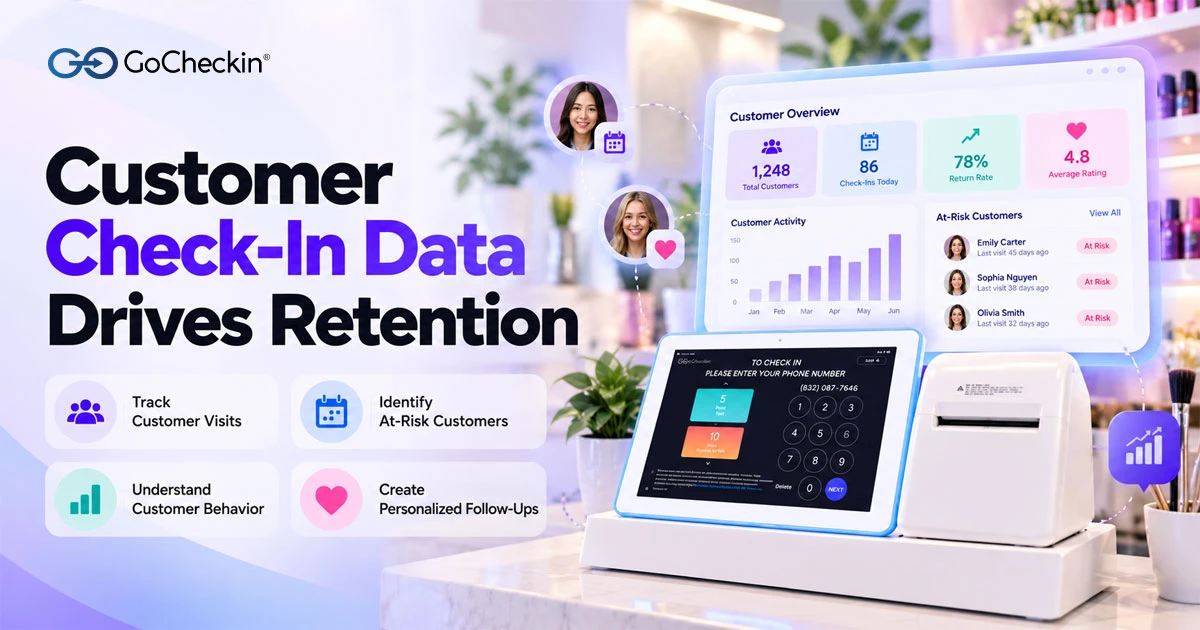
Customer check-in data helps businesses understand visit frequency and identify customers who may be at risk of churning.
Instead of relying only on memory or spreadsheets, businesses can track information such as:
- Customer visits
- Check-in history
- Appointment frequency
- Last visit date
- Services purchased
- Customer contact information
- Return patterns
This information helps businesses identify customers who may be at risk of churning.
For example, if a customer normally visits every four weeks but has not returned for eight weeks, the business can send a personalized reminder.
This turns customer retention from a reactive process into a proactive one.
3. Follow Up After Every Visit
Customer communication should not end when the appointment is finished.
A simple follow-up message can help maintain the relationship and encourage customers to return.
Depending on the business, follow-up communication could include:
- Thank-you messages
- Appointment reminders
- Rebooking reminders
- Service follow-ups
- Review requests
- Special offers
- Birthday messages
- Loyalty rewards
The goal is not to send customers constant promotions. Instead, businesses should provide useful and timely communication based on the customer's relationship with the business.
4. Encourage Customers to Book Their Next Appointment
For many service businesses, one of the most effective retention strategies is to encourage customers to schedule their next visit before leaving.
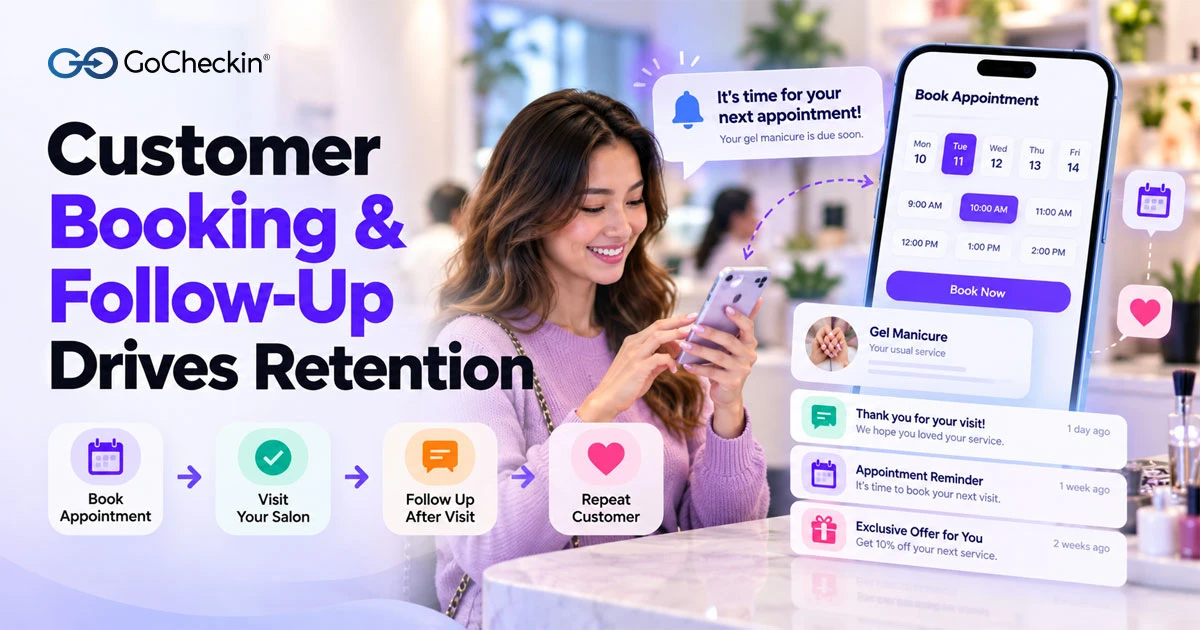
Easy booking and timely follow-up can encourage customers to schedule their next appointment.
For example, a nail salon might ask:
“Would you like to schedule your next appointment in three or four weeks?”
This creates a natural retention cycle.
Instead of waiting for customers to remember to return, the business helps them plan their next visit.
An online booking platform can make this process even easier by allowing customers to select their next appointment immediately.
5. Personalize the Customer Experience
Personalization can make customers feel recognized rather than treated like another transaction.
Businesses can use customer information to create more relevant experiences.
For example, a salon might remember:
- Preferred technician
- Favorite services
- Preferred appointment times
- Previous services
- Important customer preferences
A simple message such as “Your usual gel manicure appointment is due soon” can feel more relevant than a generic promotional message.
Personalization can also improve marketing efficiency because businesses can communicate with customers based on their actual behavior.
6. Build a Customer Loyalty Program
Loyalty programs can give customers an additional reason to continue doing business with you.
A loyalty program might offer:
- Points for visits
- Rewards after a certain number of appointments
- Referral rewards
- Birthday benefits
- Exclusive customer offers
- Discounts on selected services
The program should be easy to understand.
Customers should quickly know how they earn rewards and what they need to do to receive them.
7. Ask for Feedback Before Customers Leave
Customer feedback can help businesses identify potential churn risks.
Instead of waiting until customers disappear, ask them about their experience.
Businesses can collect feedback through:
- Post-visit surveys
- Online reviews
- Direct messages
- SMS
- Staff conversations
Questions can be simple:
“How was your experience today?”
“Is there anything we could improve?”
Negative feedback is not necessarily a bad thing. It gives businesses an opportunity to identify problems and potentially recover an unhappy customer before they leave permanently.
8. Identify Customers at Risk of Churning
A customer retention strategy becomes more effective when businesses identify customers who are becoming inactive.
For example, businesses can create simple customer segments:
Active Customers: Recently visited or booked.
At-Risk Customers: Their visit frequency has decreased.
Inactive Customers: Have not returned for an extended period.
Lost Customers: Have stopped purchasing or booking.
Each group can receive different communication.
Active customers may receive loyalty messages, while at-risk customers could receive a rebooking reminder. Inactive customers may receive a personalized win-back campaign.
9. Measure Retention, Not Just New Customers
Acquiring new customers is important, but businesses should also measure what happens after the first visit.
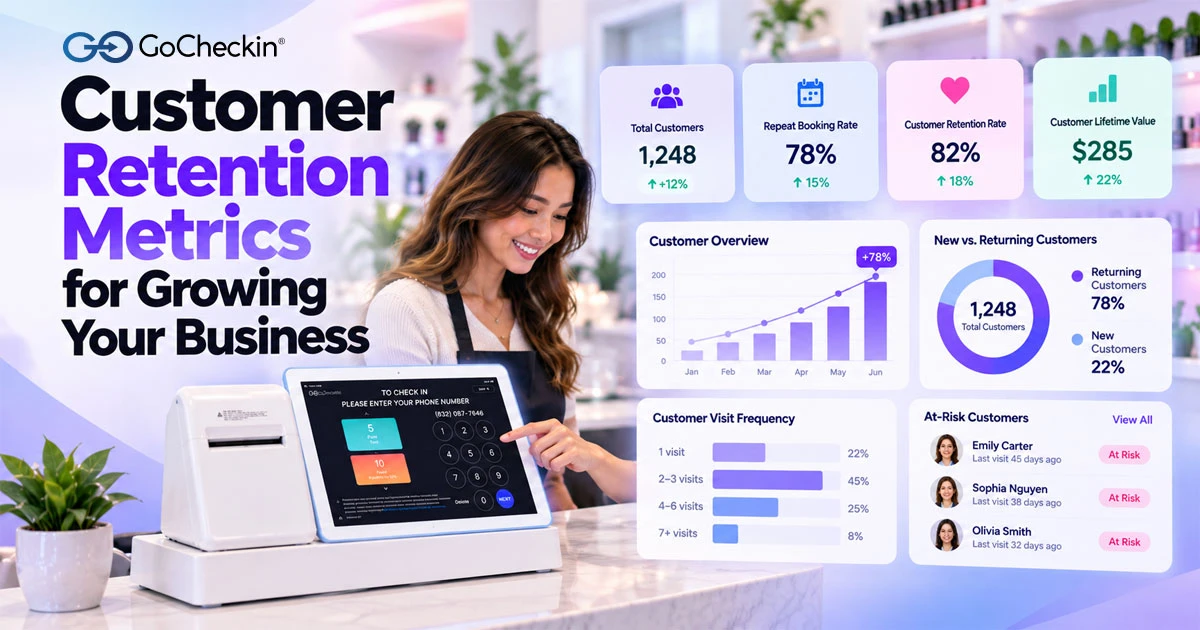
Tracking churn, repeat bookings, visit frequency, and retention helps businesses improve customer relationships.
Important customer retention metrics include:
- Customer churn rate
- Customer retention rate
- Repeat booking rate
- Visit frequency
- Average customer lifetime value
- Rebooking rate
- Customer acquisition cost
- Review rate
Tracking these metrics helps businesses understand whether marketing campaigns are producing customers who actually return.
A business may generate hundreds of new leads, but if most customers never return, the long-term growth potential can be limited.
How GoCheckIn Helps Reduce Customer Churn
GoCheckIn is designed to help service businesses improve the customer journey through tools for booking, check-in, customer management, and engagement.
By making it easier to capture customer information and understand visit activity, businesses can create more consistent retention processes.
Instead of relying entirely on manual follow-up, businesses can use customer data to identify opportunities to reconnect with customers and encourage repeat visits.
For businesses such as nail salons, spas, beauty businesses, and other service providers, connecting booking + check-in + customer data + follow-up can create a more complete customer retention workflow.
Final Thoughts
Knowing how to reduce customer churn is essential for any business that depends on repeat customers.
The most effective approach is not simply offering more discounts. Businesses should focus on creating a convenient customer experience, making booking easy, collecting useful customer data, following up consistently, personalizing communication, and identifying customers who may be at risk of leaving.
For appointment-based businesses, tools such as GoCheckIn can help connect the customer journey from booking to check-in to retention.
When businesses understand why customers leave—and take action before customers disappear—they can create stronger relationships, increase repeat visits, and build more sustainable long-term growth.