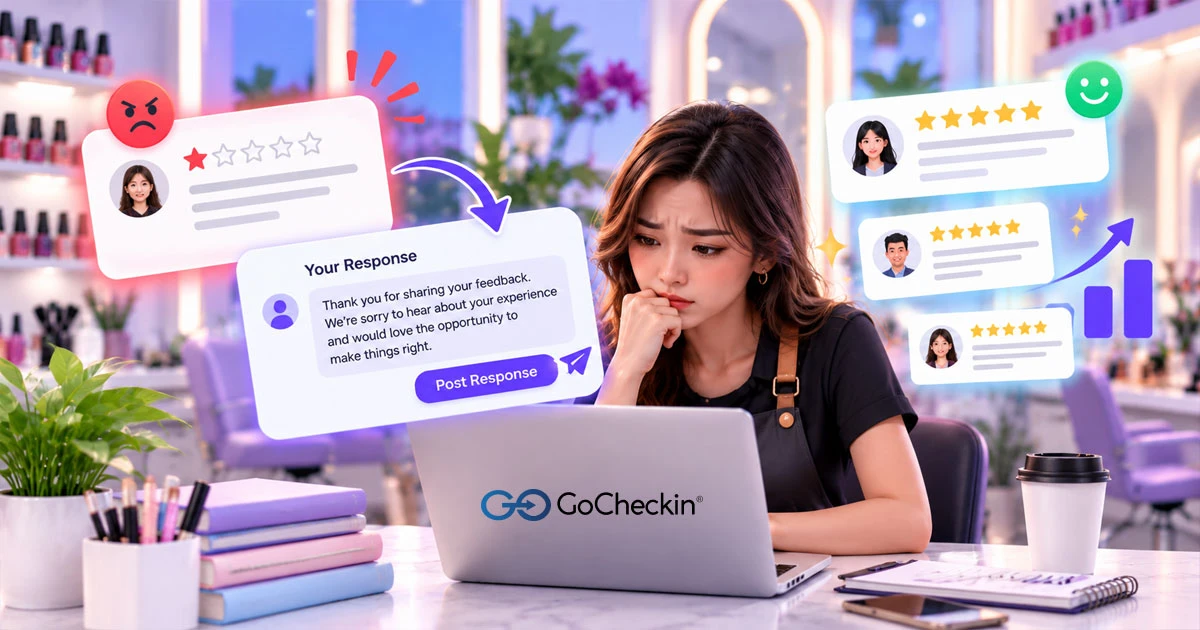
Learn how to respond to negative reviews professionally, protect your reputation, improve customer relationships, and turn customer feedback into business growth.
Negative review management strategy for improving customer experience
How to Respond to Negative Reviews: A Complete Guide for Small Businesses
Negative reviews are unavoidable for almost every business. Even businesses with excellent products and customer service can occasionally receive complaints about pricing, waiting time, service quality, communication, or the overall customer experience. What matters is not whether your business receives a negative review, but how you respond to it. A professional response can help turn a frustrated customer into a returning customer, demonstrate your commitment to customer service, and show potential customers that your business listens and cares. For nail salons, spas, beauty businesses, and other appointment-based businesses, having a clear strategy for responding to negative reviews is especially important because online reviews can strongly influence whether a new customer decides to book an appointment.
Why Negative Reviews Matter
Online reviews are more than customer comments. They are an important part of your business's digital reputation. When someone searches for a nail salon, spa, beauty salon, or local service provider, they may compare Google ratings, customer reviews, recent customer experiences, business responses, photos, service information, and booking convenience before making a decision. A negative review does not automatically damage your reputation. In fact, a thoughtful and professional response can demonstrate that your business takes customer concerns seriously. Consider the difference between saying, "That's not what happened. Please contact us," and saying, "We're sorry to hear that your experience did not meet our expectations. We appreciate you sharing your feedback and would like the opportunity to understand what happened and make things right." The second response communicates empathy, professionalism, and a willingness to improve. It also shows potential customers how your business handles difficult situations.
7 Steps to Respond to a Negative Review
1. Stay Calm and Don't Respond Emotionally
The first rule when responding to a negative review is simple: don't respond when you are angry. Some reviews may feel unfair, exaggerated, or even inaccurate. However, responding emotionally can make the situation worse and create a larger reputation problem for your business. Avoid arguing with the customer, blaming the customer, using sarcastic language, insulting the reviewer, revealing private customer information, threatening the customer, or writing an overly defensive response. Remember that your response is not only for the person who left the review. Future customers are also reading it. Your goal should be to demonstrate that your business handles difficult situations professionally and respectfully.
2. Thank the Customer for the Feedback
Even when you disagree with the review, acknowledge the customer for taking the time to provide feedback. A simple opening such as "Thank you for taking the time to share your feedback" can help establish a professional tone. This does not mean that you agree with every statement in the review. It simply shows that your business is willing to listen. For local businesses such as nail salons and spas, this is particularly valuable because potential customers often read multiple reviews before deciding where to make an appointment.
3. Acknowledge the Customer's Experience
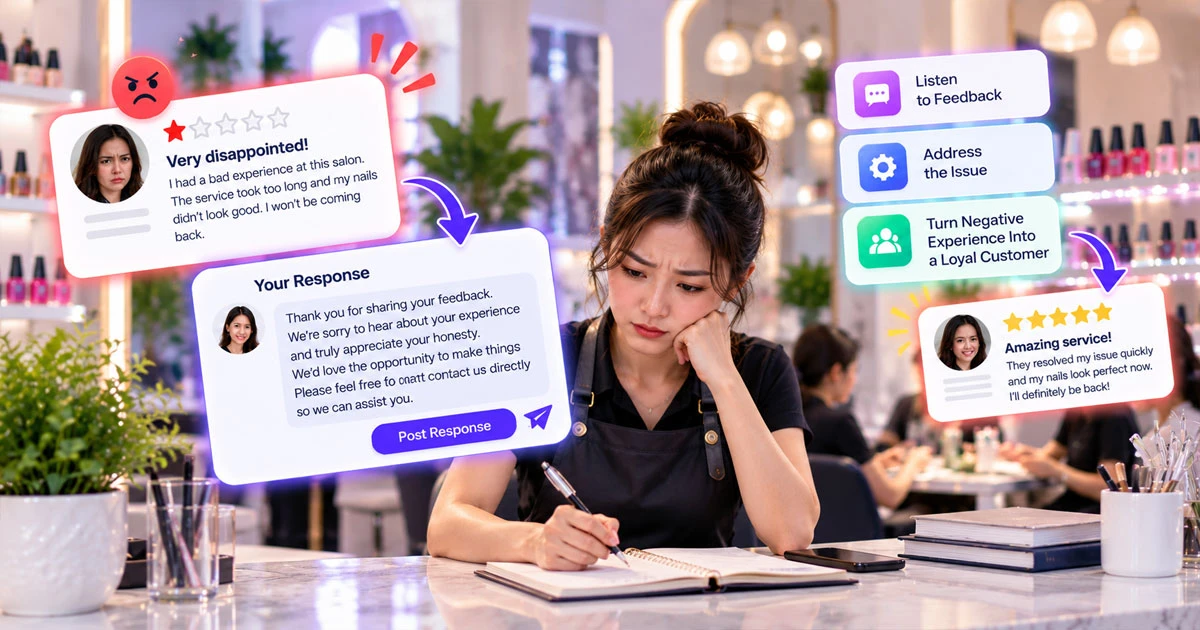
A professional response can turn a negative customer experience into an opportunity to rebuild trust.
Avoid immediately explaining why the customer is wrong. Instead, acknowledge their experience. For example, you could say, "We're sorry to hear that your appointment did not meet your expectations." This approach shows empathy without necessarily admitting that every claim in the review is correct. If the customer complained about waiting, you might say, "We're sorry that you experienced a longer wait than expected during your visit." If they complained about service quality, you could say, "We're sorry to hear that you were disappointed with the result of your service." The objective is to recognize the customer's frustration before discussing the details.
4. Address the Specific Issue
Generic responses can make a business look like it is copying and pasting the same message under every review. Instead, respond to the specific concern mentioned by the customer. For example, if a customer says, "I had an appointment at 2 PM but had to wait almost 30 minutes," a better response would be, "We're sorry about the wait during your 2 PM appointment. We understand that your time is valuable, and we're reviewing our scheduling process to prevent this from happening again." This response is stronger because it demonstrates that the business actually read the review. For businesses receiving many reviews, creating internal guidelines can help staff respond consistently while still personalizing each response.
5. Take the Conversation Offline When Necessary
Some complaints require more information than can be shared publicly. This may include billing disputes, refund requests, customer-specific appointments, employee-related complaints, or personal information. Instead of discussing sensitive information publicly, invite the customer to contact the business directly. For example, you could say, "We'd appreciate the opportunity to learn more about what happened. Please contact our team directly so we can review your appointment and work toward a solution." Moving the conversation offline protects the customer's privacy and prevents a long public argument from developing under the review.
6. Offer a Solution When Appropriate
A response becomes much more effective when the business demonstrates that it wants to solve the problem. Depending on the situation, the appropriate solution might include correcting the service, offering a refund or partial refund, providing a replacement service, having a manager follow up, clarifying pricing, providing additional staff training, or improving the booking process. However, businesses should avoid automatically offering compensation for every negative review. The goal is to solve legitimate problems, not simply purchase better reviews. A professional business should evaluate each complaint individually and determine what action is appropriate.
7. Follow Up and Learn From the Complaint
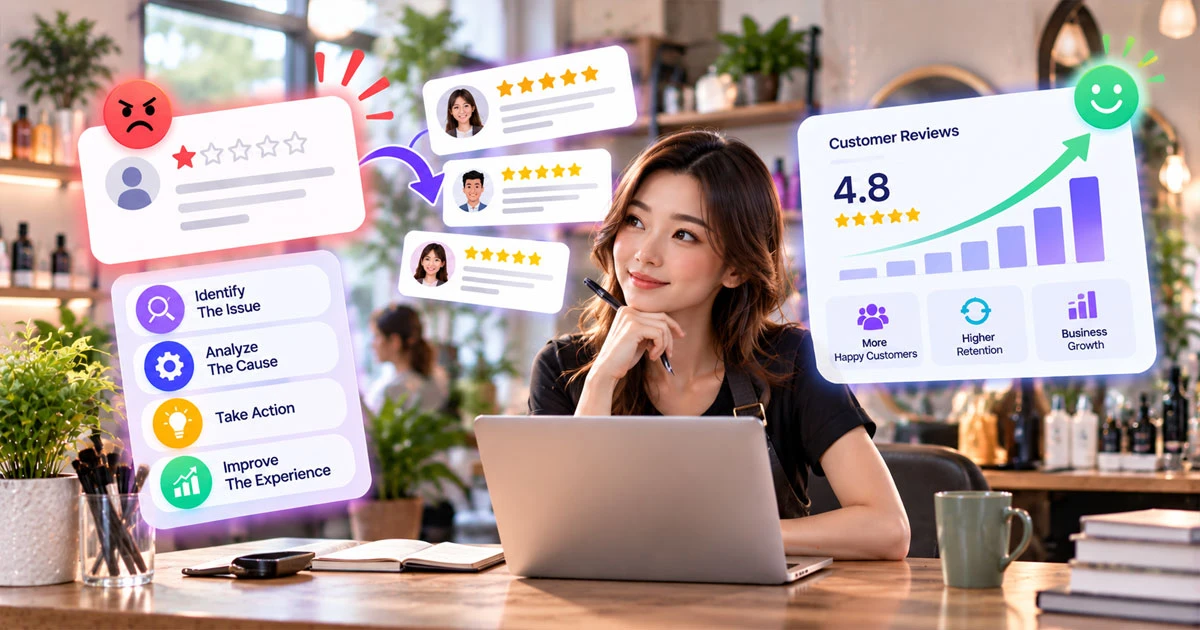
Use customer feedback to identify problems and improve your business processes.
A negative review can reveal a problem inside your business. If several customers complain about the same issue, it may indicate a process problem rather than an isolated incident. Repeated complaints about waiting may indicate a scheduling problem. Repeated complaints about pricing may indicate a communication problem. Complaints about booking may indicate that the appointment process is difficult to use. Complaints about communication may indicate a need for better staff training. Instead of treating reviews as isolated comments, businesses should use customer feedback to improve the entire customer journey.
Negative Review Response Examples
Having a few response frameworks can make it easier for staff to handle negative reviews professionally. For a service complaint, you could respond: "Thank you for sharing your feedback. We're sorry to hear that your service did not meet your expectations. We take your concerns seriously and would appreciate the opportunity to learn more about your experience. Please contact our team directly so we can work toward a solution." For a complaint about long wait times, you could say: "We're sorry about the unexpected wait during your visit. We understand how valuable your time is, especially when you have scheduled an appointment. We're reviewing our scheduling process to improve the experience for our customers." For a pricing complaint, a professional response might be: "Thank you for your feedback. We're sorry there was confusion regarding the pricing. We always want our customers to understand the cost of their services before they begin. We'd be happy to discuss your visit directly and clarify any questions." If you believe a review contains inaccurate information, avoid attacking the customer. Instead, remain professional and say: "Thank you for sharing your feedback. We're sorry that you left with this impression. We'd like to clarify the situation and better understand what happened. Please contact our team directly so we can review the details with you."
What Businesses Should Never Do When Responding to Negative Reviews
There are several common mistakes businesses should avoid. First, don't argue publicly with a customer. A long argument can make a small complaint much bigger. Second, don't reveal customer information. Never publish private appointment details, phone numbers, payment information, or other sensitive information in a public response. Third, don't blame employees publicly. Internal problems should be handled internally rather than discussed in front of potential customers. Fourth, don't use fake reviews. Creating fake positive reviews or asking people to post misleading reviews can seriously damage trust and your business reputation. Fifth, don't ignore every negative review. Ignoring legitimate complaints can make customers feel that the business does not care. Finally, don't use exactly the same response everywhere. Templates can save time, but every response should still feel relevant to the customer's actual concern.
How GoCheckIn Can Help Improve the Customer Experience
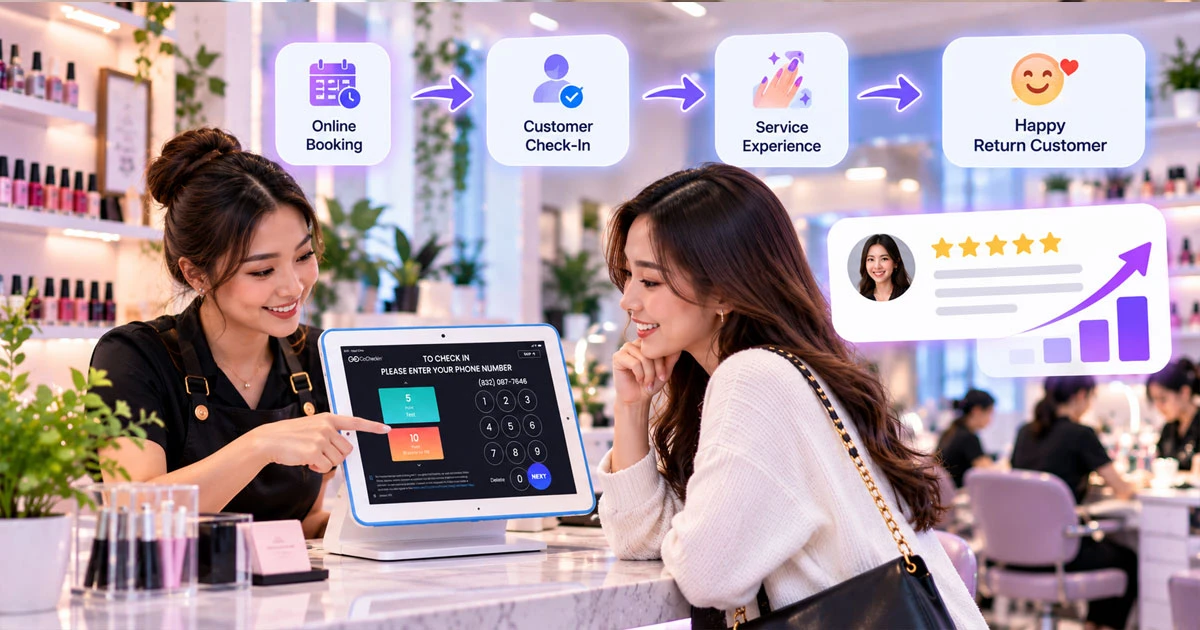
GoCheckIn helps businesses create a smoother customer journey from booking and check-in to customer relationships.
Responding to negative reviews is only one part of reputation management. A better strategy is to identify and solve customer experience problems before they become negative reviews. GoCheckIn helps businesses manage important parts of the customer experience, including customer check-in and interactions. For appointment-based businesses such as nail salons, spas, and beauty businesses, creating a smoother customer journey can help reduce common frustrations related to waiting, communication, and appointment management. A more organized check-in and booking process can help businesses reduce customer waiting time, improve the check-in experience, organize customer information, create a smoother appointment process, improve customer communication, encourage repeat visits, and build stronger customer relationships. The objective is not simply to get more positive reviews. The bigger goal is to create an experience that customers naturally want to talk about positively.
Turn Negative Feedback Into Business Improvement
A negative review should not always be viewed as a threat. It can also be a valuable source of business intelligence. Whenever your business receives a complaint, ask three questions. First, what exactly frustrated the customer? Identify the specific problem rather than focusing only on the emotional language in the review. Second, is this an isolated incident or a recurring issue? Look for patterns across reviews, customer conversations, and staff feedback. Third, what process can we improve? Turn the complaint into an actionable change. For example, if customers repeatedly complain about long waiting times, the root cause could be too many appointments being scheduled during the same period. The solution could be improving scheduling and appointment capacity. The result can be a better customer experience and fewer complaints. This approach changes reputation management from simply replying to reviews into a continuous customer-experience improvement process.
Final Thoughts
Knowing how to respond to negative reviews is an essential skill for modern local businesses. The best response is not necessarily the longest one. It should be professional, empathetic, specific, and solution-focused. Remember these principles: stay calm, thank the customer for the feedback, acknowledge their experience, address the specific issue, move sensitive conversations offline, offer an appropriate solution, and learn from recurring complaints. Most importantly, don't focus only on responding to negative reviews after they happen. Build a customer experience that reduces the reasons customers become frustrated in the first place. For nail salons, spas, beauty businesses, and other appointment-based businesses, tools such as GoCheckIn can help create a smoother customer journey from booking and check-in to ongoing customer relationships. A negative review is not always the end of a customer relationship. With the right response, it can become the beginning of a better one.