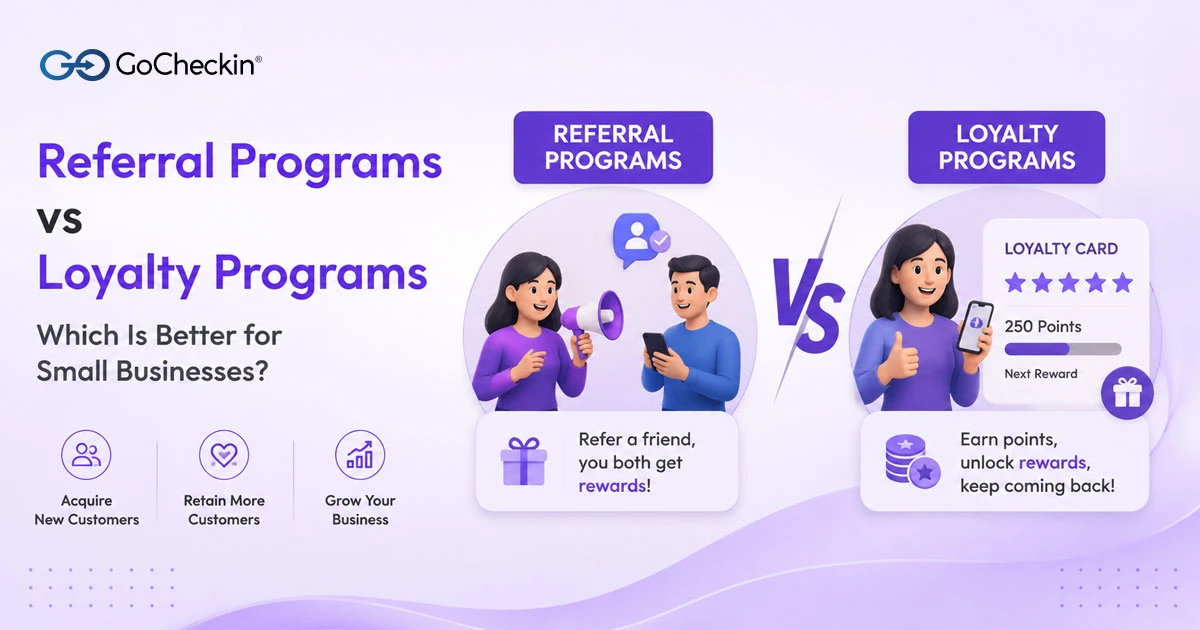
Two popular strategies are referral programs and loyalty programs. Although both can increase customer engagement and revenue, they work in different ways.
Referral Programs vs Loyalty Programs: Which Is Better for Small Businesses?
Customer retention and customer acquisition are two of the biggest priorities for small businesses. While attracting new customers is important, encouraging existing customers to return and recommend your business can often create more sustainable growth.
Two popular strategies are referral programs and loyalty programs. Although both can increase customer engagement and revenue, they work in different ways.
So, what is the difference between referral programs vs loyalty programs, and which one is better for your business?
The answer depends on your goals, customer behavior, and business model. This guide explains how both programs work, their benefits, key differences, and how small businesses can use them together.
What Is a Loyalty Program?
A loyalty program rewards customers for repeatedly purchasing from a business.
Instead of giving customers an incentive to bring in someone new, loyalty programs focus on encouraging existing customers to come back.
Common loyalty program rewards include:
- Points for every purchase
- Discounts after reaching a spending threshold
- Free products or services
- Birthday rewards
- VIP memberships
- Exclusive promotions
- Rewards for frequent visits
For example, a nail salon could give customers points every time they book an appointment. After earning enough points, customers could receive a discount or free service.
The goal is simple: give customers a reason to choose your business again.
What Is a Referral Program?
A referral program encourages existing customers to introduce new customers to your business.
The customer usually receives a reward when their referral completes a qualifying action, such as making a purchase or booking a service.
For example:
“Refer a friend and you both receive $10 off your next appointment.”
Referral programs turn satisfied customers into an additional source of new business.
Instead of relying entirely on advertising, businesses can use their existing customer base to generate new leads through word-of-mouth recommendations.
Referral Programs vs Loyalty Programs: Key Differences
Although referral and loyalty programs can work together, their primary objectives are different.
The simplest way to remember the difference is:
Loyalty programs reward customers for staying. Referral programs reward customers for sharing.
Benefits of Loyalty Programs
1. Increase Customer Retention
One of the biggest advantages of a loyalty program is encouraging customers to return.
When customers know they are accumulating points or working toward a reward, they have an additional reason to continue purchasing from the same business.
For businesses with frequent transactions—such as salons, spas, restaurants, cafés, and retail stores—this can be particularly valuable.
2. Increase Customer Lifetime Value
A loyal customer can generate revenue repeatedly over months or years.
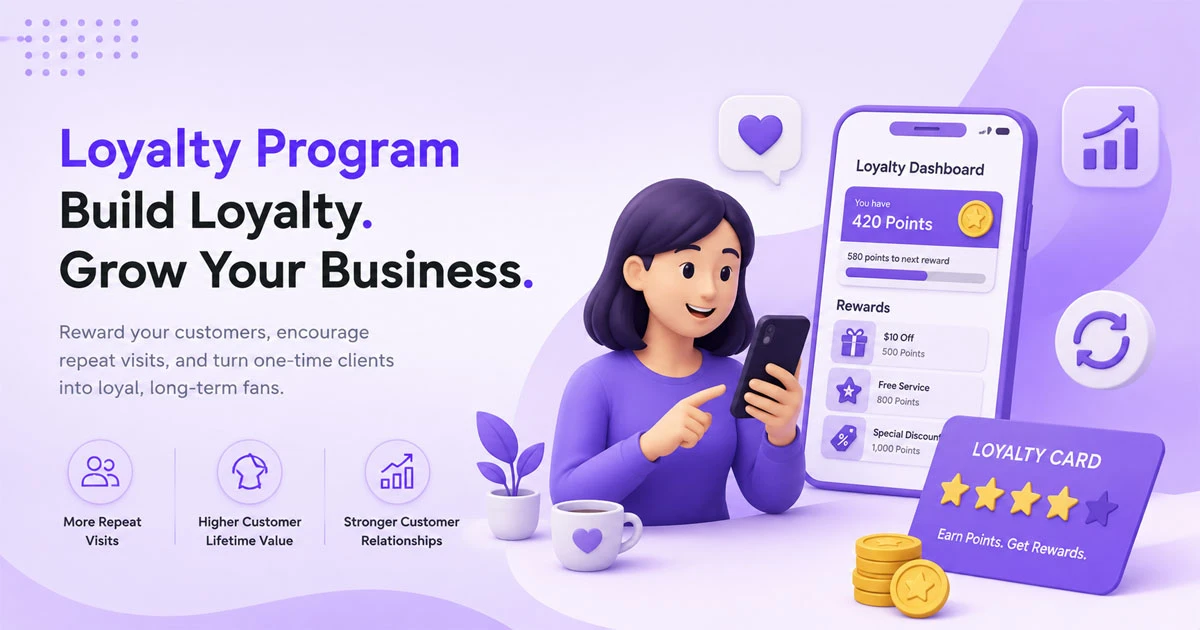
Loyalty programs encourage customers to return, purchase more often, and build long-term relationships with a business.
A well-designed loyalty program can encourage customers to:
- Visit more frequently
- Spend more per visit
- Try additional services
- Take advantage of personalized offers
This can increase customer lifetime value (CLV) over time.
3. Build Stronger Customer Relationships
Loyalty programs create opportunities to understand customer behavior.
Businesses can track information such as purchase frequency, spending patterns, favorite services, and reward preferences.
This information can support more personalized marketing campaigns.
4. Encourage Repeat Purchases
A reward gives customers a tangible reason to return.
For example, a business might offer:
“Visit 5 times and receive $20 off your next service.”
This creates a clear incentive for customers to complete another purchase.
Benefits of Referral Programs
1. Generate New Customers
The biggest advantage of referral programs is customer acquisition.
Instead of depending only on paid advertising, businesses can encourage existing customers to introduce friends, family members, and colleagues.
This can create an additional acquisition channel.
2. Leverage Word-of-Mouth Marketing
People often trust recommendations from people they know more than traditional advertisements.
A referral program turns that natural behavior into a structured marketing strategy.
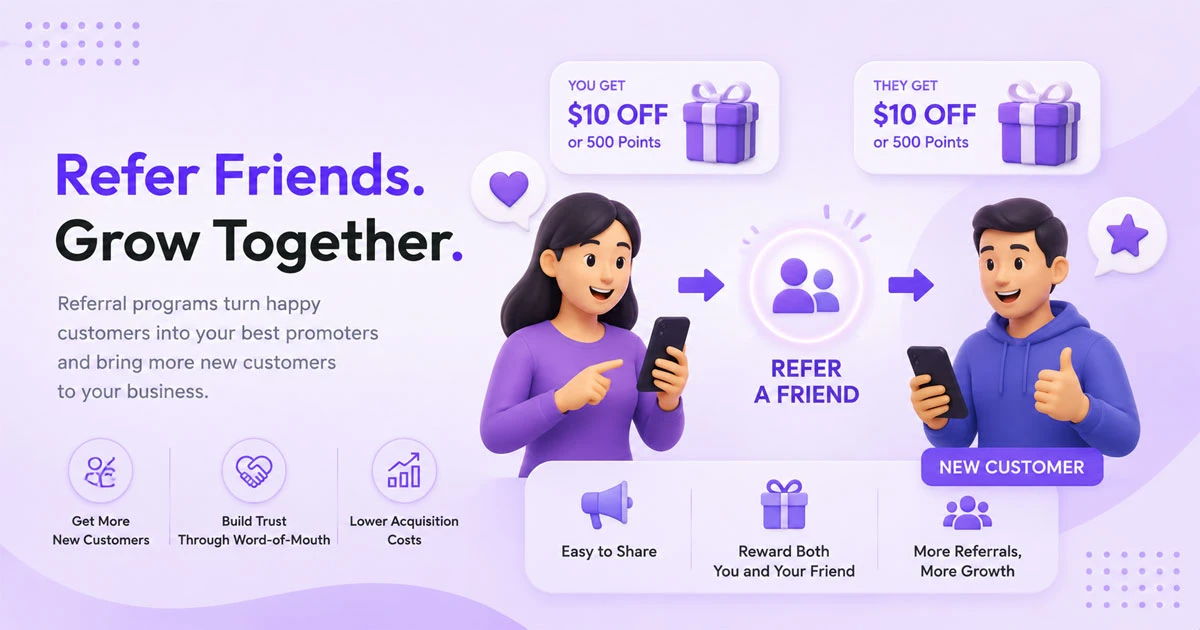
Referral programs turn satisfied customers into brand advocates who can bring new customers through word-of-mouth marketing.
For example:
“Love your experience? Refer a friend and receive a reward when they visit.”
This gives customers a reason to actively recommend the business.
3. Lower Customer Acquisition Costs
Paid advertising can become expensive, especially in competitive local markets.
Referral marketing can provide another way to generate customers without paying for every impression or click.
Businesses still need to provide rewards, but the cost may be tied directly to successful referrals.
4. Attract Customers With Higher Trust
A referred customer often enters the business with some level of trust because someone they know recommended it.
This can make referrals especially valuable for service businesses where reputation and personal recommendations strongly influence purchasing decisions.
Which Is Better: Referral or Loyalty?
There is no universal winner.
If your biggest problem is customers not coming back, a loyalty program may be the better starting point.
If your biggest problem is attracting new customers, a referral program may have a greater impact.
Consider these scenarios:
Choose a loyalty program if:
- You already have a strong customer base
- Customers purchase repeatedly
- You want to increase visit frequency
- You want to increase customer lifetime value
- Customer retention is your main challenge
Choose a referral program if:
- You want more new customers
- Your customers are satisfied with your service
- Word-of-mouth is important in your industry
- You want another customer acquisition channel
- You want to leverage your existing customer network
Can You Use Referral and Loyalty Programs Together?
Absolutely.
In fact, combining both strategies can create a stronger customer growth system.
For example, a nail salon could create a program like this:
Loyalty: Earn 1 point for every $1 spent.
Referral: Refer a new customer and receive 500 bonus points after their first appointment.
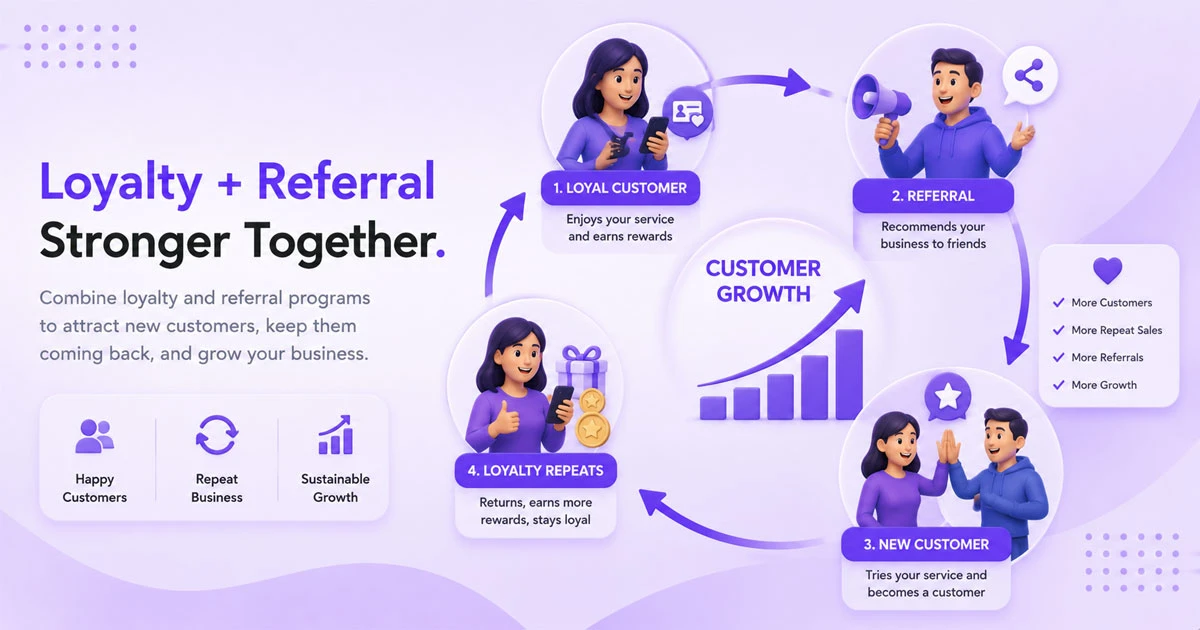
Combining loyalty and referral programs can create a customer growth cycle that supports both retention and acquisition.
Now the customer has two reasons to engage with the business:
- Continue purchasing to earn rewards.
- Recommend the business to friends to earn additional rewards.
This creates a cycle where retention supports acquisition, and acquisition creates new customers who can eventually become loyal customers.
How GoCheckIn Can Support Customer Loyalty and Referrals
For small businesses, managing customer engagement manually can become difficult as the customer database grows.
A digital customer engagement system can make it easier to collect customer information, track visits, manage rewards, and communicate with customers.
GoCheckIn can help businesses create a more connected customer experience by combining customer check-in and engagement processes with customer data.
For businesses such as nail salons, spas, beauty businesses, and other service-based companies, having customer information in one system can make it easier to identify returning customers and build targeted retention campaigns.
Instead of treating every customer the same, businesses can use customer activity and purchase history to create more relevant offers.
Best Practices for Referral and Loyalty Programs
Whether you choose one program or combine both, keep the experience simple.
Make Rewards Easy to Understand
Customers should immediately understand:
- How they earn rewards
- What they receive
- When they can redeem rewards
Avoid complicated rules that require customers to calculate multiple conditions.
Offer Rewards Customers Actually Want
A reward is only effective when customers perceive it as valuable.
Consider discounts, free services, bonus points, exclusive experiences, or other benefits that are relevant to your customers.
Promote the Program Consistently
A great loyalty or referral program will not work if customers do not know it exists.
Promote it through:
- SMS
- Social media
- In-store signage
- Booking confirmations
- Receipts
- Staff recommendations
Measure the Results
Track metrics such as:
Loyalty program metrics:
- Repeat purchase rate
- Visit frequency
- Average order value
- Customer lifetime value
- Reward redemption rate
Referral program metrics:
- Number of referrals
- Referral conversion rate
- Revenue from referred customers
- Referral cost per acquisition
- Number of active referrers
These metrics help determine which strategy generates the strongest business impact.
Final Thoughts
When comparing referral programs vs loyalty programs, remember that they solve different problems.
A loyalty program focuses on retention, helping businesses turn existing customers into repeat customers.
A referral program focuses on acquisition, helping businesses turn satisfied customers into advocates who bring in new customers.
For many small businesses, the best approach is not choosing one over the other. Combining loyalty rewards with referral incentives can create a customer growth cycle that encourages people to return, spend more, and recommend your business to others.
With the right digital customer engagement tools, businesses can make these programs easier to manage, measure, and scale.
For businesses looking to improve customer retention and build stronger relationships with their customers, GoCheckIn provides a practical foundation for creating a more connected customer experience.